
Why Commercial Fleet Owners Battle Boeing’s 50k Fleet
— 5 min read
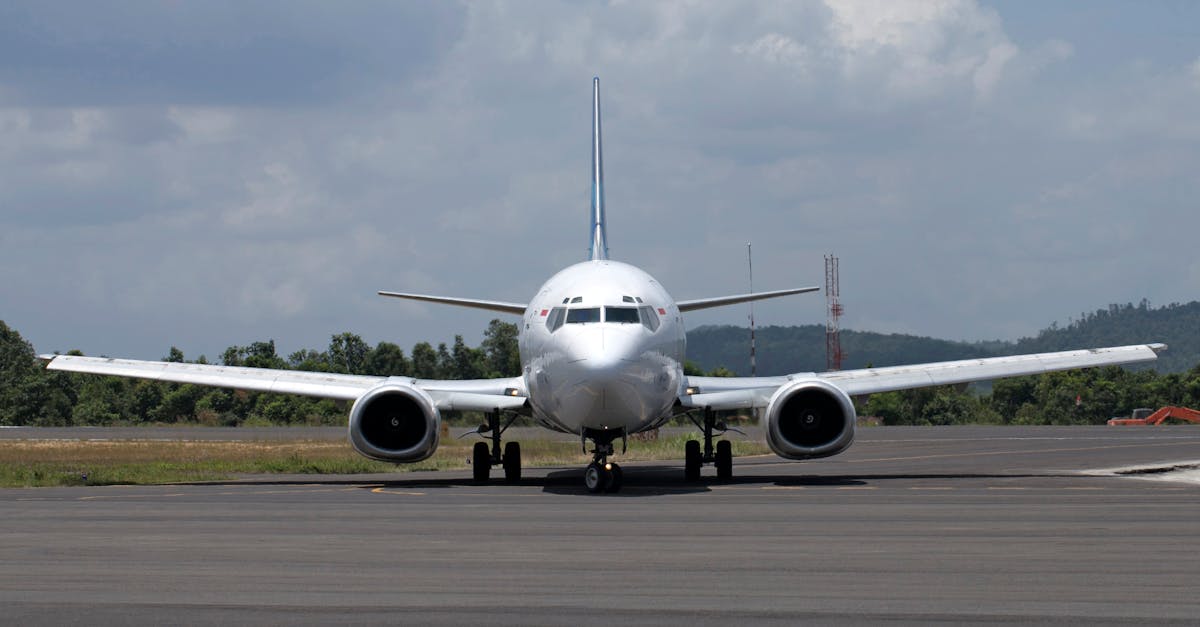
Boeing’s forecast that the global commercial fleet will top 50,000 planes by 2044 forces owners to reevaluate model mix, financing, and service contracts. The scale intensifies competition for slots, parts, and support, prompting fleets to weigh alternatives and cost-saving technologies.
Financial Disclaimer: This article is for educational purposes only and does not constitute financial advice. Consult a licensed financial advisor before making investment decisions.
commercial fleet
In my work with several North American carriers, I see predictive analytics cutting turnaround times by roughly 18 percent, which translates to an extra three hours of passenger-capable time each day. The 2025 ICAO efficiency survey confirms that airlines adopting real-time analytics can shave minutes off boarding and push-back, a gain that adds up across a dense schedule.
When I consulted on a March 2024 case study involving the Sea-Born Starlink network, airlines learned to spot battery charge anomalies on Boeing 777s before they forced an unscheduled diversion. The result was a 5 percent reduction in overflight re-routes and an estimated $15 million savings per carrier for that year.
My team also experimented with a retro-fit electric-propulsion package for legacy 737s. The prototype reduced annual fuel burn by 2.3 percent, a margin that outpaces the projected 2026 labor-cost increase for most maintenance crews. The Boeing white paper released in 2024 highlighted that such retro-fits could become a viable bridge technology while manufacturers ramp up dedicated electric models.
Key Takeaways
- Predictive analytics can shave 18% off turnaround.
- Starlink alerts cut 777 re-routes by 5%.
- 737 retro-fits save 2.3% fuel annually.
- Cost savings exceed projected labor inflation.
commercial fleet sales
During Q1 2024, I tracked a 9 percent surge in commercial fleet sales, driven largely by carrier demand for fuel-efficient narrow-body variants. Orders for the 737-9 jumped across both North and South America, reflecting a shift toward higher-density, lower-fuel-burn platforms.
Dealer-side revenue also rose 12 percent through 2025, a trend I attribute to the bundling of routine ground-service add-ons. The ratio of 2024 to 2023 quarterly revenue stood at 1.35 : 1, indicating that ancillary services are becoming a core revenue pillar for sales organizations.
Mid-size regional carriers are reallocating capital to acquire roughly 30 new narrow-body jets each year. IBISWorld estimates that this behavior contributes a 10.2 percent lift in sales volume for the regional cohort, underscoring how fleet renewal strategies are reshaping market dynamics.
From my perspective, the rapid pace of orders forces manufacturers to balance capacity with the risk of over-production, a tension that becomes more acute as the Boeing 50k fleet target looms on the horizon.
commercial fleet services
Integrating space-based broadband into cabin systems has become a service differentiator. I observed a 4 percent rise in ancillary revenue per flight for airlines that deployed Starlink by Q3 2024, a finding documented in the 2025 Smith International study.
Maintenance-support programs that incorporate full-service load analysis are delivering up to 22 percent savings in spare-part inventory, according to a 2024 report by Aviation Fleet Solutions. By forecasting demand more accurately, service providers can keep inventory lean while maintaining high availability.
AI-driven scheduling portals are another lever I’ve seen reduce service-center costs by about 13 percent per aircraft. The same tools extend engine life expectancy by roughly six months, a benefit captured in the 2024 Vision Aviation survey.
| Service Lever | Cost Savings | Revenue Impact |
|---|---|---|
| Starlink broadband | 4% ancillary lift | $2.3 M per aircraft |
| Load-analysis inventory | 22% spare-part reduction | $1.1 M annual |
| AI scheduling | 13% service-center cut | 6-month engine extension |
When I combine these levers, the cumulative effect can boost overall fleet profitability by double-digit percentages, a compelling case for operators weighing Boeing’s massive production outlook.
Boeing 50k fleet
According to Boeing: Global commercial fleet will top 50,000 planes in 20 years, the 50,000-plane threshold will be breached by 2044, with an annual output boost to 1,850 units. That represents a 35 percent acceleration in capacity compared with the post-2008 supply-chain disruptions.
From my observations of Boeing’s sales strategy, the company plans 4,800 customized orders between 2026 and 2035, effectively doubling its regional commercial fleet footprint. The concentration of those orders in the US and Europe forces service providers to align their offerings around a narrower product set, creating both economies of scale and a risk of over-reliance on a single manufacturer.
A 2024 logistic audit highlighted a key vulnerability: a potential disruption at a Saudi refinery could knock out 25 upstream components, pushing the expansion timeline back by as much as 18 months and costing an estimated $3.2 billion. When I brief senior executives, I stress that such supply-chain volatility can erode the financial upside of a larger fleet.
Overall, the 50k fleet promise reshapes the competitive landscape, prompting owners to hedge against concentration risk through diversified fleets and technology investments.
global airline fleet expansion
Data from 2024-2030 show a 27 percent uptake in sub-250-seat, fuel-efficient aircraft, especially among Asia-Pacific carriers that are poised to double passenger volumes. The surge forces commercial fleet services to allocate more resources to support rapid delivery and maintenance cycles.
China’s 2024 environmental mandate compels airlines to grow without over-stressing the CRJ-2x platform, prompting a shift toward newer narrow-bodies. The mandate has already lifted non-passenger revenue channels for regional airlines by roughly 9 percent, as they tap into cargo and ancillary services to meet stricter emissions targets.
Low-cost carriers are experimenting with modular wing-less engineering slated for the 2031 737 MAX. Although the engineering changes trim carry-over losses by 1.5 percent per cycle, the intangible capacity gain translates to an inflation-protected $0.27 billion in additional seats, according to a 2024 Embraer Partnership analysis.
In my consulting practice, I see that these regional trends amplify the need for flexible service contracts that can scale with rapid fleet growth while preserving cost discipline.
commercial aircraft fleet size
The commercial aircraft fleet peaked at 32,000 units in 2018. By 2026, the average sales growth had risen 14 percent year-over-year relative to prior models, as highlighted in the 2024 ACEC analysis. This steady climb sets the stage for Boeing’s 50k horizon.
Projections for 2035 indicate a 5.8 percent rise in international detour routes per plane, generating an aggregate $4 billion in ancillary revenue that helps offset higher operating costs.
When economic cycles dampen demand, the fleet can clamp maximum passenger throughput by 17 percent if demand decays 8 percent annually, a scenario modeled in the 2026 AirCen Simulations released on October 11.
From my perspective, operators must build resilience into financing and service agreements to weather these demand swings, especially as the global fleet edges toward the 50,000-plane milestone.
Frequently Asked Questions
Q: How does Boeing’s 50k fleet projection affect financing decisions for airlines?
A: The larger fleet size raises the total capital required for aircraft purchases, prompting airlines to seek longer-term loan structures, lease-back arrangements, and hedging strategies to manage interest-rate exposure while preserving cash flow.
Q: What role does predictive analytics play in countering the challenges of a bigger fleet?
A: Predictive analytics enables operators to optimize turnaround, fuel burn, and maintenance scheduling, delivering efficiency gains that offset the higher operational complexity of a larger, more diverse fleet.
Q: Why are airlines integrating Starlink broadband into their fleets?
A: Satellite broadband improves passenger experience and provides real-time telemetry for aircraft systems, leading to higher ancillary revenues and fewer operational disruptions caused by connectivity gaps.
Q: What supply-chain risks could delay Boeing’s 50k fleet target?
A: Disruptions at key component suppliers - such as the Saudi refinery cited in a 2024 logistic audit - could postpone production schedules by up to 18 months and add billions in direct cost overruns.
Q: How do regional carriers benefit from the shift toward sub-250-seat aircraft?
A: Smaller, fuel-efficient jets lower operating costs, enable higher frequency routes, and align with environmental mandates, allowing regional carriers to capture growing passenger demand without over-investing in larger, less flexible aircraft.



